The Old Butcher’s Arms, 20 Bridge Street, Billinghay
Over the past few months, I have undertaken a detailed exploration of the history of the public houses of Billinghay, a rural village in Lincolnshire with a rich yet often overlooked social heritage. What began as a general interest in the village’s inns and alehouses soon evolved into a more personal journey, as I uncovered ancestral connections to other well-known establishments: the Coach and Horses, the Golden Cross and the Cross Keys.
Drawing upon a range of historical sources—including census records, trade directories, parish registers, and newspaper archives—I have traced the lives of the men and women who once ran these vital community hubs. During this research, I discovered that members of my own family played an integral role in the history of these inns, deepening both my understanding of local history and my connection to it.
I now turn my attention to the Butcher’s Arms, a former public house first licensed in 1869. Situated on 20 Bridge Street, Billinghay. The building, constructed of red brick with a gabled slate roof, stands within the Billinghay conservation area, a reminder of the village’s architectural and social heritage. It remained in operation for just over a century before closing its doors in 1970, and has since been converted into a private residence.
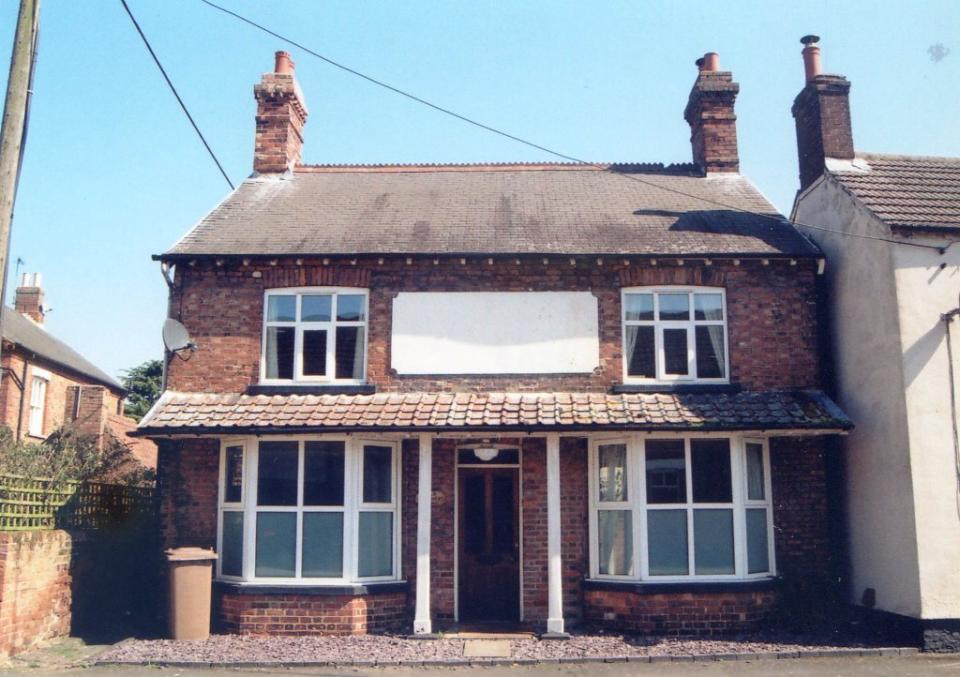
Photo by Mark Acton, 2018.
As with the inns I’ve explored before, the Butcher’s Arms holds stories not only of landlords and patrons, but also of the village itself: its trades, traditions, and transformations. So let’s embark on another historical journey through the inns of Billinghay, as we uncover its origins, proprietors, and social role of this well-remembered establishment.
The Butcher’s Arms was established in Billinghay in 1869, according to the Closed Pubs of Lincolnshire register. Making this inn one of the younger local hostelries, its opening marked the emergence of a new social venue in the village during a period of growth and change in rural public life. Butcher’s Arms: https://www.closedpubs.co.uk
I started my research by examining the local newspapers.
📅 Recorded: March 1880
The earliest named landlord of the Butcher’s Arms is James Foster, documented in the Sleaford Gazette on 27 March 1880. He was summoned to court for permitting drunkenness on the premises—an offence that incurred a fine of £1 13s 6d (approximately £100 in 2017). Despite the conviction, his licence remained intact, and he was permitted to continue operating the inn. This incident not only sheds light on Foster’s tenure but also offers insight into the standards and enforcement of licensing laws in late 19th-century Lincolnshire.

Knowing the innkeeper’s first name to be James, I searched the 1871 census to identify whether James Foster was the first landlord of the Butcher’s Arms. The record confirms that a James Foster was then residing in the village, described as an innkeeper, along with his wife Jane and their son William. Although the census does not specify the name of the establishment, previous research indicates that Foster was not connected with any other public house in the village at that time. Confirming he was indeed the original proprietor of the Butcher’s Arms.

James Foster was a local man born in Walcott in 1820. He managed the Butcher’s Arms until 1890, a span of 20 years. In the 1881 census, he was recorded being a beer seller.
A newspaper article in the Sleaford gazetteer, 12 April 1890, entitled Transfers, confirms the transfer of the Butcher’s Arms from James Foster to Thomas Burrows.

Thomas Burrows is later mentioned in various newspaper articles, which confirm both his tenure and the length of time he served as landlord. He was particularly instrumental in opening the pub to local activities and clubs, thereby establishing it as a centre of community life.
Thomas Burrows is recorded in the 1891 census living at the Butcher’s Arms, his occupation being a beer housekeeper and farmer. He was born in 1843 in Billinghay, where he Mary, they had 4 children, Elizabeth, Robert, Lucy and Bertha.
Thomas died 6 May 1898, his death is recorded in England & Wales, National Probate Calendar (Index of Wills and Administrations), 1858-1995.

Further newspaper articles confirm that Thomas’s widow, Mary, continued to manage the Butcher’s Arms.
It soon became apparent that the Butcher’s Arms did not enjoy the same high profile as the Coach & Horses, Cross Keys, or the Golden Cross. Mentions in the press were comparatively infrequent, suggesting that the establishment played a more modest role in the village’s public life, or that its clientele and activities did not attract the same level of public or journalistic attention.
Nevertheless, the information that does survive offers valuable insight into 19th-century village life. I did have a wry smile when I came across an article in the Sleaford Gazette dated 1 January 1898, which reported that the annual Pig Club supper was held at the Butchers Arms—a particularly fitting location, given the name.
Pig Clubs were common in rural communities during the 19th and early 20th centuries, providing a form of cooperative insurance among agricultural labourers and smallholders. Members contributed to a shared fund throughout the year to cover the cost of purchasing and raising pigs, with the meat being distributed among the contributors, especially important during times of hardship or festivity.
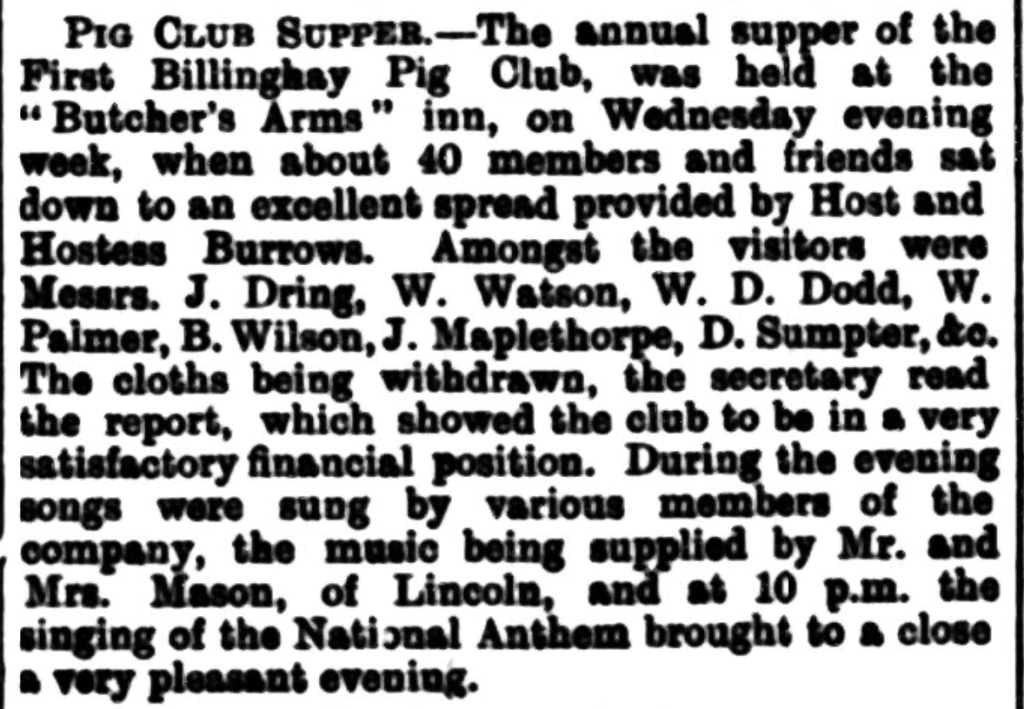
The Pig Club supper was typically a convivial occasion marking the end of the season, and its hosting at the Butchers Arms underscores the pub’s role as a site of working-class mutual support, social cohesion, and communal identity. Though less prominent in the historical record than other Billinghay inns, the Butcher’s Arms clearly contributed to the everyday social fabric of the village.
In the Lincoln Leader and County Advertiser 28 October 1899, widow Mary Burrows is recorded being the hostess for the annual Pig Club Supper.

A search of the 1901 and 1911 census confirms that Mary was still running the Butchers Arms, living with her were her four children – Elizabeth, Robert, Lucy and Bertha. By 1921, Mary had left the Butchers Arms and was living in Billinghay with her unmarried daughter, Elizabeth. Mary died the following year in July 1922; her obituary was reported in the Lincoln Leader & County Advertiser – 8 July 1922.

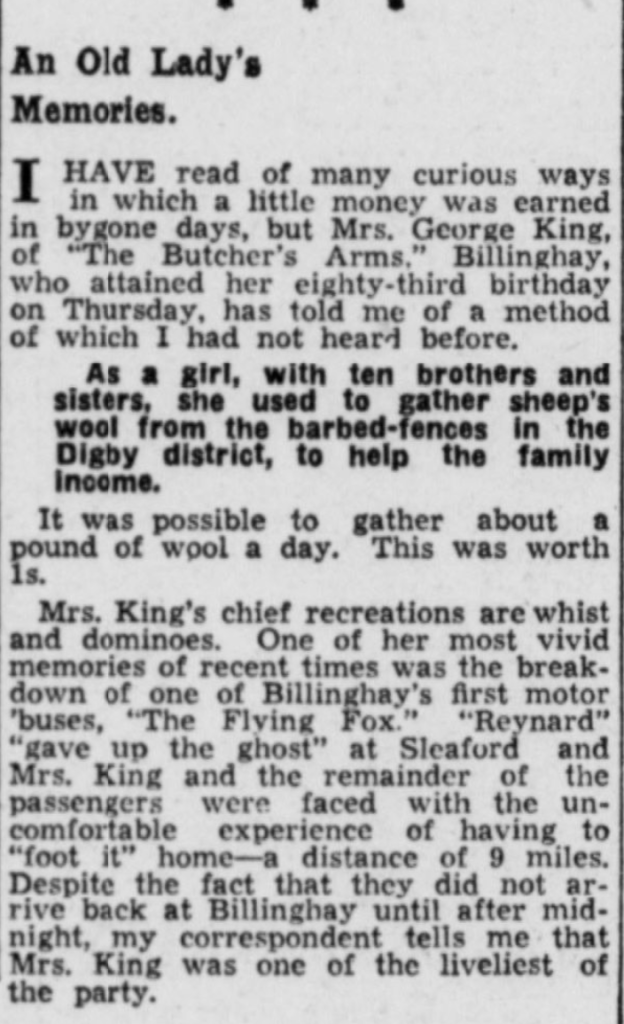
Identifying who took over the Butcher’s Arms after Mary Burrows was challenging, until I found in the Lincolnshire Standard & Boston Guardian, dated 26 September 1936, a charming article titled An Old Lady’s Memories recounts the reflections of Mrs. George King, aged 83, of the Butcher’s Arms but this did not confirm if she was the landlady.
However, clearly there was a link, which I was able to establish later, meanwhile, I thought it was interesting to share Mrs. King’s reminiscences, who offers a delightful and poignant portrayal of resilience, community, and everyday rural existence.
In 1937, the landlord was Walter Hodson. This was recorded in the Sleaford Gazette, March 1937. I searched for him in the 1921 census, which recorded him as an Innkeeper and engine driver, but furthermore solved the mystery of who Mrs George King was, of the Butchers Arms in 1936?
The census revealed Mrs Sarah King mother in law to Walter was living with the family.

Mrs Sarah King clearly played a big part in the Butchers Arms, and was also recorded being the landlady of the inn. which was later taken over by Walter Hodson. In September 1938, she celebrated her 85th birthday as reported in the Lincolnshire Standard & Boston Guardian, along with her photo.
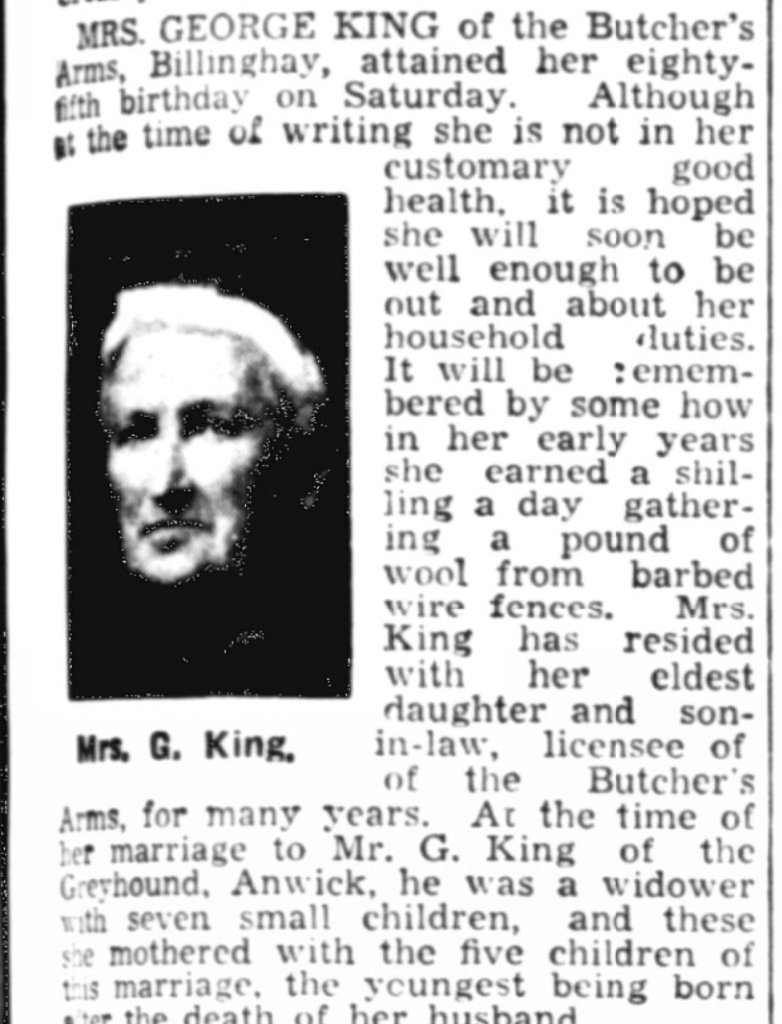
Sarah King lived until she was 96 years, she died in 1954. What a character she was.
By 1939, Walter Hodson and his family had left the Butchers Arms when the License was transferred to Mr Frederick Percy Hawtin. Later in 1941, the licence was transferred to his wife, Phyllis Edith Groom Hawtin. In 1954, Phyllis transferred the licence to Mr Richard Wells, as confirmed in the Sleaford Gazette 8 Jan 1954.
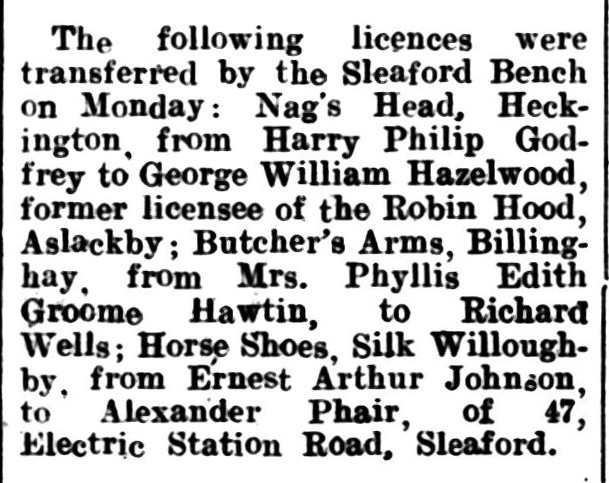
1956 Mr Richard Wells was still the landlord, as confirmed in the Lincolnshire Standard & Boston Guardian 17 Jan 1956.
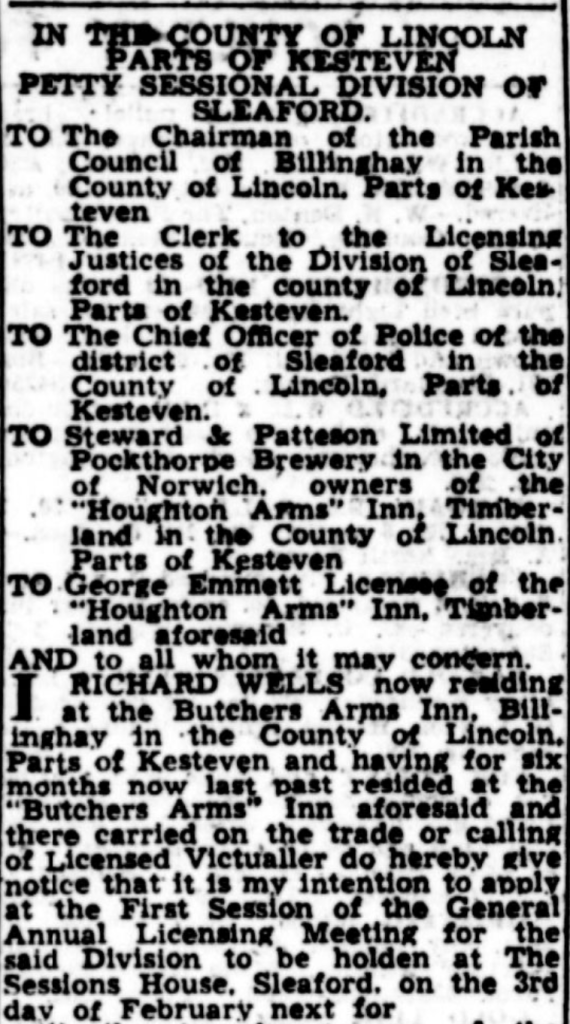
I earlier mentioned the Butcher’s Arms did not have such a high profile as a beer-house, however, this may be clarified via this interesting article in The Sleaford Gazette, 7 Feb 1858.
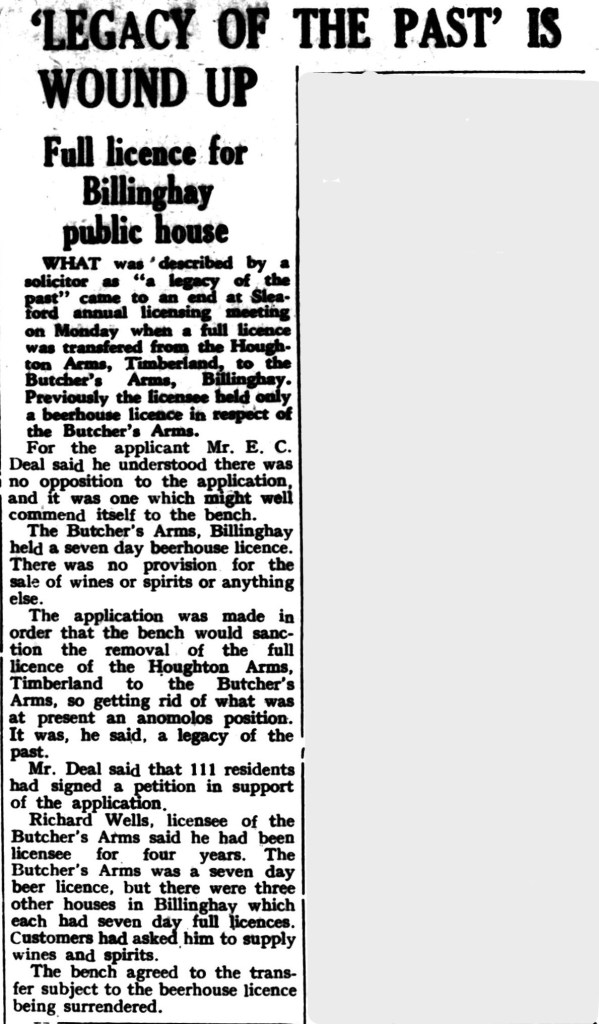
This article describes that up till 1958, the Butcher’s Arms only had a beer-house licence, meaning it could sell beer, but not wines or spirits. The solicitor (Mr. E. Deal) applied to have the full licence transferred, eliminating the unusual situation in which one village pub had limited licensing rights.
He emphasised this was to rectify an anomaly, calling the previous arrangement “a legacy of the past.” 111 residents signed a petition supporting the application.
The licensee of the Butchers Arms, Richard Wells, had held the beer-house licence for four years. Richard Wells noted there were three other fully licensed premises in Billinghay, and customers had requested that he provide wines and spirits as well.
An interesting insight into the past history of the Butchers Arms, and its limitations in what it could provide the customers.
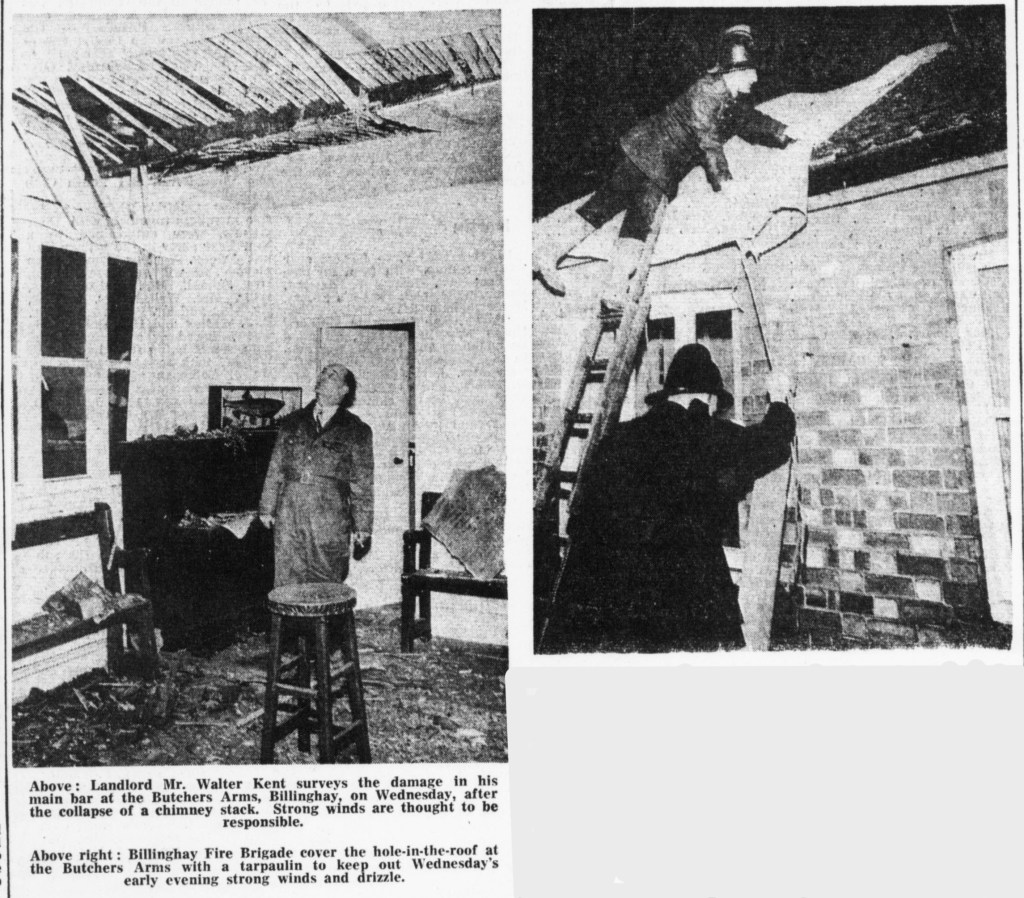
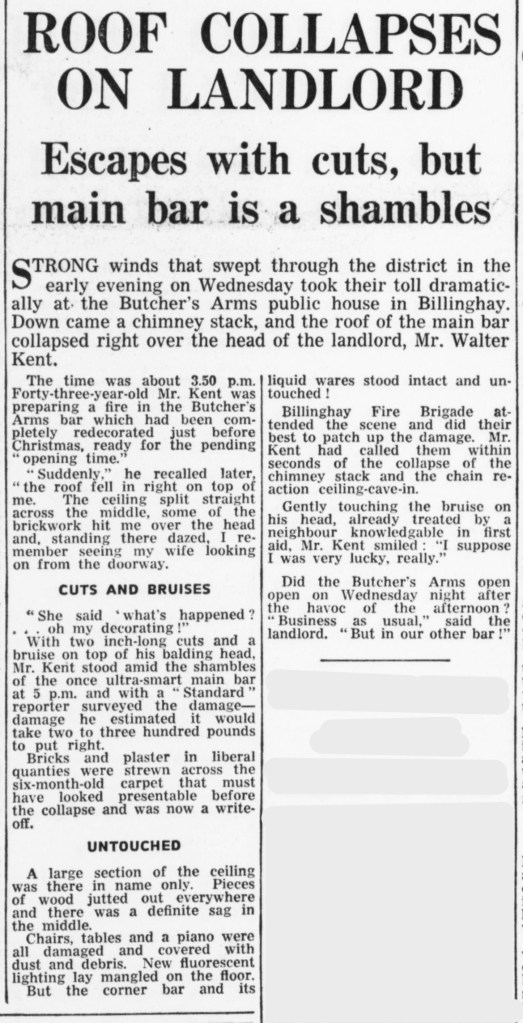
Calamity struck in 1965 when suspected strong winds brought down the chimney stack, which crashed onto the roof and fell into the main bar of the Butcher’s Arms.
The event was reported in the Sleaford Standard, 15 January 1965, the article reports how the landlord, Mr Walter Kent, was in the bar at the time of the incident.
The Butcher’s Arms does seem to have played a more modest role compared to the larger or more prominent establishments like the Coach & Horses or the Golden Cross Inn. Its operation more closely aligns with what might be termed an alehouse rather than a full-fledged inn or public house.
Alehouses in the 18th and 19th centuries were typically smaller, often run out of the front rooms of private dwellings, and focused primarily on the sale of beer or ale rather than offering food, lodging, or broader amenities. That was evident earlier when, in 1958, it was only licensed to sell ale.
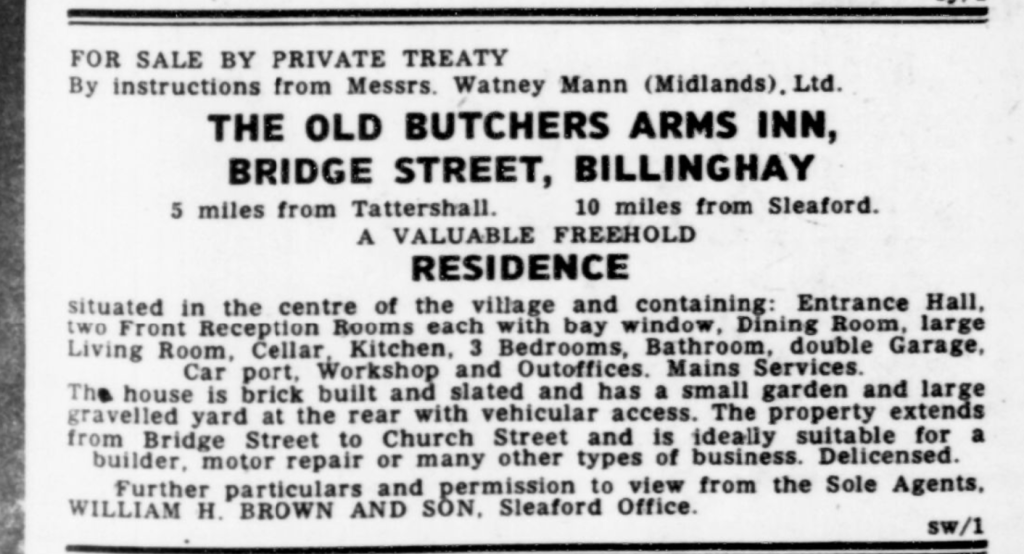
The Butcher’s Arms finally closed its doors in 1970 and was subsequently put up for sale by the brewery Watney Mann.
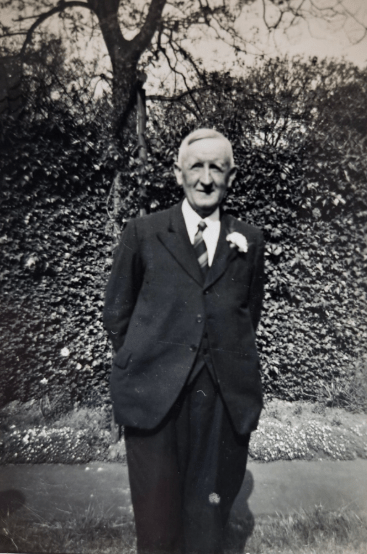
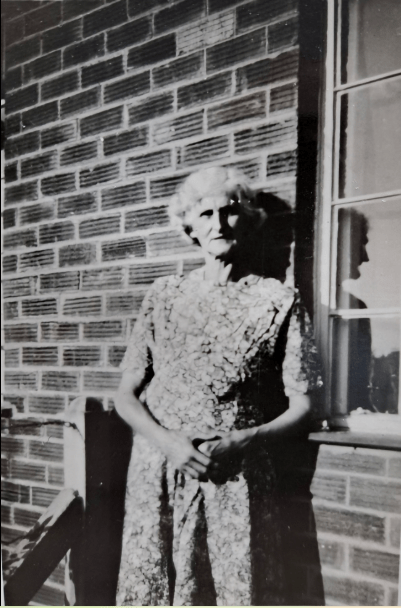
Update: Huge thanks to Geoff Hodson for extra information and two amazing photos of Sarah King, Walter Hodson’s mother in law. Known as Great Granny King.
“Walter Hodson was my grandfather. He married George and Sarah’s daughter who was also called Sarah. They had 8 children Mary, Vera, Jack (my father), Arthur, Bennett, Bernard, Joyce and Connie. Sarah senior was known as Great Granny King in the village and there are many descendents still living in the village. My grandfather passed away in 1949 and grandmother in 1951. I think they were still living in Brunswick Square at the time”
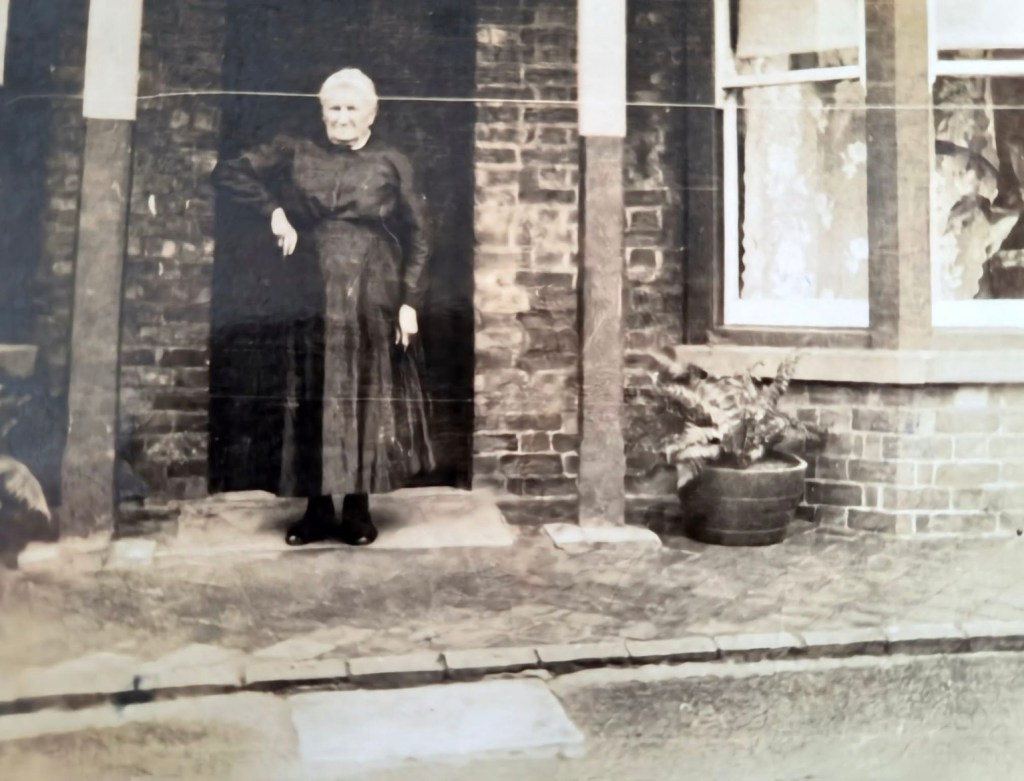
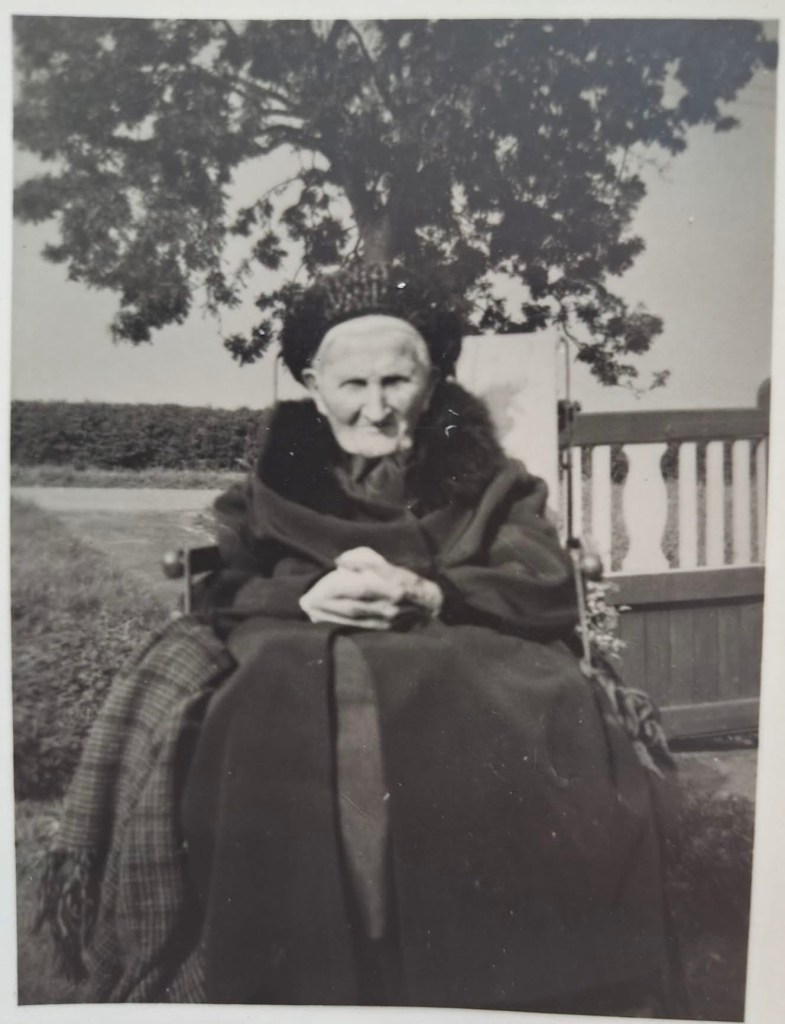
Geoff has also been kind enough to share these two wonderful photos of Sarah Hodson (King) and her husband, Walter Hodson, former Innkeeper of the Butcher’s Arms and Engine driver. Many thanks, Geoff.
As always, if you can share any old photos or stories about The Butcher’s Arm’s with me or have any connections, I would love to hear from you. Please comment here or email jackocats2@gmail.com
 familyhistorystories.blog
robert burrows took over the pub after his mother my husbands father was born there
LikeLiked by 1 person